
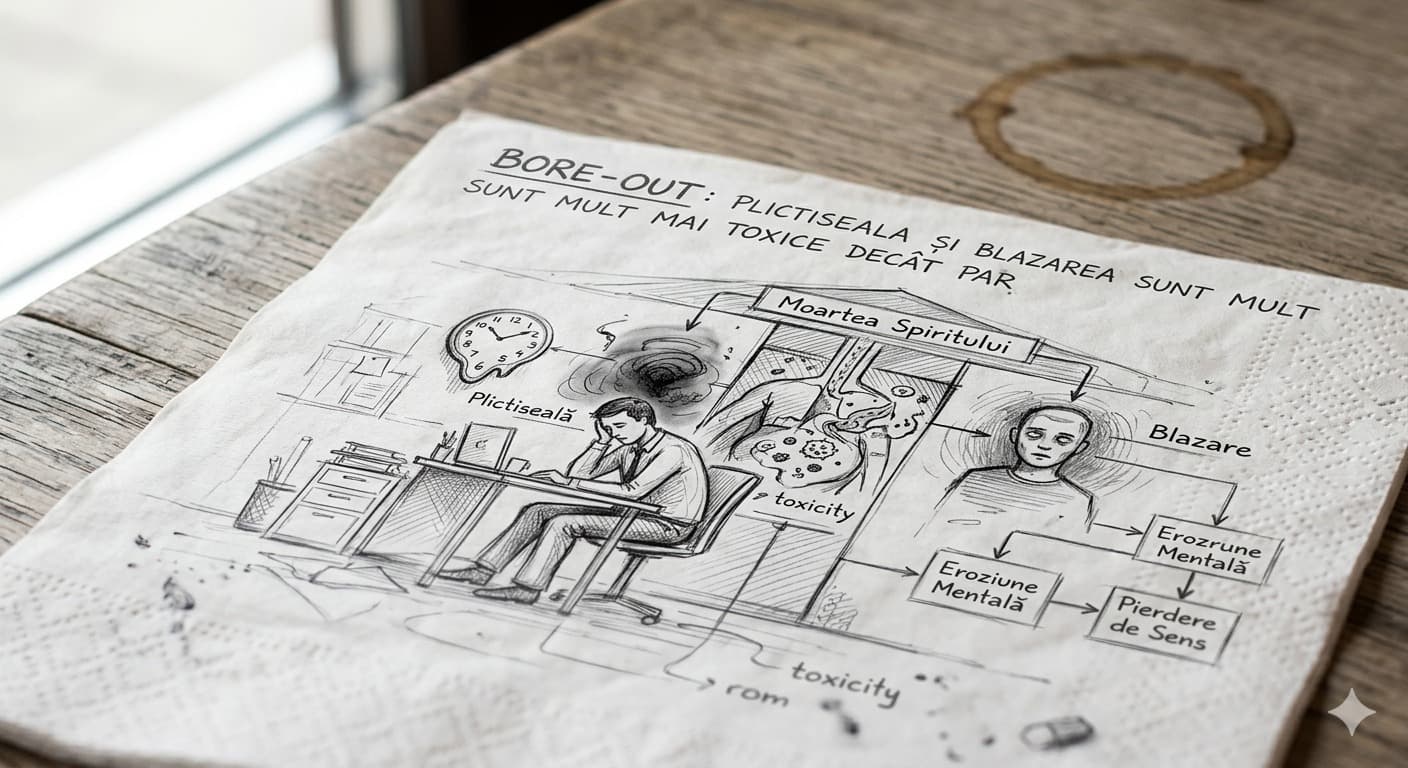
Bore-out: boredom and disengagement are far more toxic than they seem
Everyone talks about burnout. We know the script already: too many tasks, impossible deadlines, constant pressure, and stress that piles up until exhaustion. What we talk about far less is the opposite extreme, one that seems harmless but can be just as damaging: bore-out, or chronic boredom at work. Many times we do not even recognize its impact, because it feels embarrassing to admit the problem is not too much, but too little.
On the surface, getting paid to do very little can sound like a privilege. In reality, bore-out is a subtle form of emotional exhaustion. It is that hollow feeling that hits on Monday morning when you open your laptop and know that nothing challenging is waiting for you, nothing that lets you use your strengths or feel that your role truly matters. Just hours to fill, presence to perform, and a routine that does not stimulate you in any way.
What is bore-out, really?
Bore-out appears when your capabilities are far above the level of the tasks you receive, when you do not have enough work, or when you settle into a routine that does not challenge you at all. It has nothing to do with laziness and everything to do with lack of meaning and direction. Over time, that professional stagnation eats away at your energy, motivation, and confidence.
How do you know you are there?
The signs of bore-out are subtler than the signs of burnout, but just as persistent. Many people end up pretending to work, becoming experts at aimless scrolling or strategically opened windows just to look busy. Paradoxically, that performance is exhausting. Even though you are not doing anything demanding, you still get home drained because boredom consumes energy when the mind has nowhere to go. Over time, self-esteem drops as well: you start wondering whether you are still good at anything, whether your skills are fading, or whether you have fallen behind. Emotional disconnection from the job, the team, and the outcomes also sets in, as if everything turns into background noise.
Why is it such a taboo topic?
It is hard to tell someone you do not have enough work in a world where many people are burned out and working overtime. Guilt appears immediately: how can you complain about not having enough to do when others can barely keep up? But the human mind does not work on the principle that less automatically means better. We need meaning, progress, and challenge. Feeling useless for eight hours a day is a slow form of emotional self-sabotage, even if it does not look as dramatic as excessive stress.
What can you do if this sounds familiar?
Bore-out does not disappear on its own. The first option is to ask for new responsibilities or speak openly with your manager about the fact that you have unused capacity. Sometimes the people around you simply do not realize you could do more. You can also use dead time to learn something new, earn a certification, or build skills that will serve you in the long run. If the structure of the job does not allow growth or variety, it may be a sign that it is time to look elsewhere.
Work does not have to be the center of your life, but it should not be the place where time feels frozen. A healthy job is one where you feel you are growing, that you have a role, and that what you do matters, at least a little.